-
-
-
675C Yishun Ave 4, #03-808 FERN GROVE, Singapore 763675

About Us
Lorem ipsum dolor sit amet, consectetur elit, sed do eiusmod tempor incididunt ut labore et magna aliqua. Ut enim ad minim veniam laboris.
Please fill out the form below and we will get back to you as soon as possible.
Lorem ipsum dolor sit amet, consectetur elit, sed do eiusmod tempor incididunt ut labore et magna aliqua. Ut enim ad minim veniam laboris.
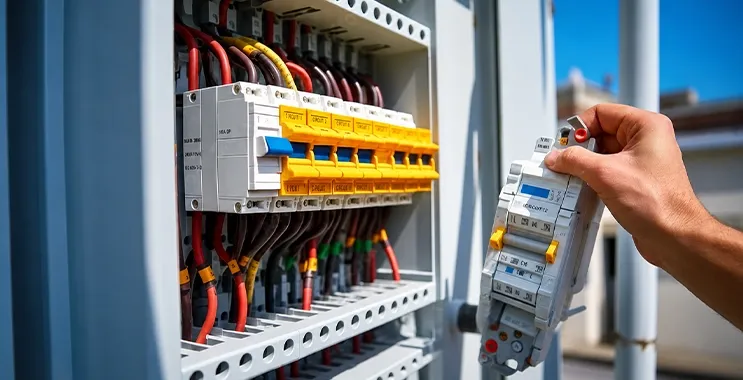
Modern homes rely on more electrical devices than ever before. From televisions and computers to kitchen appliances, chargers, washing machines and air-conditioning systems, the demand for convenient power points continues to increase.
Adding extra switches and power points can make a home much more convenient, but simply installing more sockets does not automatically mean the existing electrical circuit can safely handle the additional load. Proper planning is important to prevent circuit overloading and maintain electrical safety.
Every electrical circuit has a limit on how much current it can safely carry. Connecting too many high-power appliances to the same circuit can increase the electrical load and may cause circuit breakers to trip or electrical components to overheat.
Before adding new power points, an electrician should assess the existing circuit, connected appliances, wiring condition and expected electrical demand. This helps determine whether the existing circuit is suitable or whether a new dedicated circuit may be required.
Frequent Circuit Breaker Trips: Repeated tripping can indicate excessive load, a short circuit or another electrical fault that requires professional inspection.
Warm Power Sockets: A socket or switch that becomes unusually warm during normal use should not be ignored.
Burning Smell: A burning or unusual smell from a socket, switch or electrical appliance may indicate overheating or damaged components.
Flickering Lights: Persistent flickering may be related to a loose connection, faulty fitting, circuit issue or another electrical problem.
A safe power-point installation starts with understanding how the existing electrical system is being used. Instead of simply extending an already heavily loaded circuit, the electrician can determine the most suitable circuit arrangement based on the home's requirements.
High-power appliances such as ovens, induction cookers, water heaters and air-conditioning systems may require appropriate dedicated circuits. The electrical installation should therefore be planned around both the current needs of the household and possible future appliance requirements.
“More power points should mean more convenience, not more electrical risk. Proper circuit planning is the key to a safer and more reliable home.”
SK Electrical Services
The best location for a new power point depends on how the room is used. Planning the locations before renovation or furniture installation can help reduce the need for extension cords and multi-plug adapters.
Living Room Entertainment Areas
Home Office and Work Areas
Kitchen Appliance Areas
Bedroom Charging Areas
Utility and Laundry Areas
Extension cords and multi-plug adapters can be useful for temporary situations, but they should not be used as a permanent substitute for properly installed power points. Connecting multiple high-power appliances through one outlet or adapter can increase the electrical load and create unnecessary safety risks.
If you regularly need extension cords because there are not enough sockets in a particular area, adding properly positioned power points may provide a safer and more convenient long-term solution.
Before installing additional switches or power points, a professional electrician can inspect the existing wiring, distribution board, circuit arrangement and electrical load. This helps identify whether additional points can be safely connected to an existing circuit or whether further electrical work is necessary.
In Singapore, electrical work should be carried out or supervised by an EMA Licensed Electrical Worker where required. Professional installation helps ensure that new electrical points are properly connected, tested and suitable for their intended use.