-
-
-
675C Yishun Ave 4, #03-808 FERN GROVE, Singapore 763675

About Us
Lorem ipsum dolor sit amet, consectetur elit, sed do eiusmod tempor incididunt ut labore et magna aliqua. Ut enim ad minim veniam laboris.
Please fill out the form below and we will get back to you as soon as possible.
Lorem ipsum dolor sit amet, consectetur elit, sed do eiusmod tempor incididunt ut labore et magna aliqua. Ut enim ad minim veniam laboris.
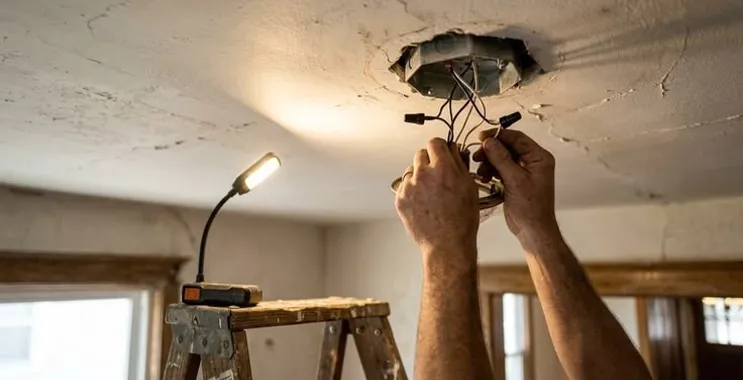
Good lighting and proper ventilation can make a big difference to the comfort of your home. Whether you are installing a new ceiling light, replacing an old fitting or adding a ceiling fan, the installation needs to be planned carefully to ensure safe and reliable operation.
In Singapore homes, light and ceiling fan installation may involve electrical wiring, ceiling mounting and existing electrical points. Choosing the right fitting for each room and having the installation carried out correctly can help improve comfort, lighting quality and everyday safety.
Installing a light or ceiling fan is not only about connecting the fitting and switching it on. The installer should check the existing electrical point, wiring condition, mounting location and compatibility of the new fitting before completing the installation.
Electrical work involving fixed wiring should be carried out or supervised by an EMA Licensed Electrical Worker. This is particularly important when a new lighting point, fan point or additional wiring is required.
Living Room: Choose lighting that provides comfortable general illumination while complementing your furniture and interior design.
Bedroom: Softer and comfortable lighting can create a relaxing environment. Ceiling fans can also improve air circulation during warm weather.
Kitchen: Bright and practical lighting is important for food preparation, cooking and cleaning activities.
Study Room: Good task lighting can provide better visibility for reading, working and studying.
Ceiling fans need secure mounting because they are moving electrical appliances. Before installation, the ceiling condition, mounting point, fan size and available clearance should be checked carefully.
For HDB flats, HDB's electrical renovation guidelines state that a ceiling fan installation is subject to requirements including a maximum fan weight of 6kg and a minimum clear height of 2.4 metres from the finished floor level to the fan blades. Always check the latest HDB requirements for your flat before installation.
“A well-installed light improves visibility, while a properly mounted ceiling fan improves comfort. Safety should always come first when working with electrical installations.”
SK Electrical Services
Old lights and ceiling fans can develop problems over time. Flickering lights, unusual sounds, wobbling fans, overheating, damaged switches or inconsistent operation may indicate that the fitting needs inspection or replacement.
Flickering or Unstable Lights
Wobbling Ceiling Fan
Unusual Electrical Sounds
Overheating or Burning Smell
Old or Damaged Electrical Fittings
If a ceiling fan starts wobbling, making unusual noises or behaving differently from normal, it should be inspected rather than ignored. A professional can check the mounting, electrical connection and condition of the fan before recommending repair or replacement.
Similarly, flickering lights or repeated electrical issues may indicate a problem with the fitting, switch, connection or wiring. Professional inspection can help identify the actual cause instead of simply replacing the light fitting.
Professional installation helps ensure that your light fittings and ceiling fans are installed securely and connected correctly. It can also help reduce installation mistakes and ensure that electrical work follows the applicable requirements.
Safe and secure ceiling mounting.
Proper electrical connection and testing.
Better positioning for lighting and airflow.
Identification of existing electrical problems.